
The Johnstown sugar factory impacted not only the immediate area, but the entire sugar beet industry. This unique refinery was built to extract sugar from molasses and was the only successful plant of its kind in the world.
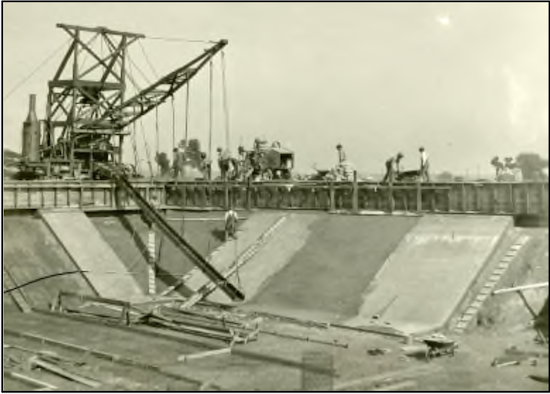
Willard Letford was influential in convincing the company to locate here. In 1920, the GW Sugar Company began construction on the factory between Johnstown and Milliken on Hwy 60. At the time, molasses – the end product of refining beet sugar – was used in a process to extract sugar from the abundant flow of “discard” molasses from the area’s beet mills.
Opening day on Oct 28, 1926 was quite a celebration with 1,800 visitors, 1,500 box lunches from Baur’s of Denver served by the Woman’s Club, and speeches given by the dignitaries, including Letford and W.D. Lippett, the GW president.
These men were assigned to push a button to “start” the turbines that day for the onlookers, but it was a fake. The actual button was way on the other side of the factory, so plant supervisor C.H. Criswell had arranged for several men to align themselves such that when Letford and Lippett pressed the button, the men signaled along the line to the engineer to start the turbines. As the dignitaries pressed the button, the turbine started, and operations officially commenced. It was an engineer out of the limelight who had the privilege of getting things rolling that day.
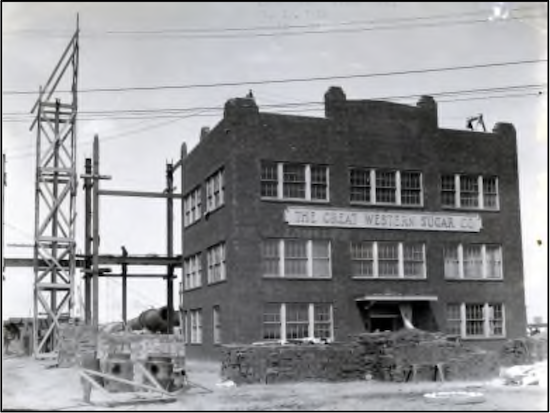
The Johnstown factory had its ups and downs, especially at first, but the barium molasses process was rapidly becoming the wonder of the sugar world. Foreign countries sent delegates over the years to view its operations as the workers and machinery created sugar and put molasses sales back at a profit.
During WWII, the factory was closed down when the government confiscated molasses to make alcohol and products for the war effort. The facility stayed open with a skeleton crew. The U.S. Army made a prisoner-of-war camp out of the sugar warehouse and nearby grounds. The plant briefly became a “practice school” in coordination with the University of Colorado in the early 1940s to train chemical engineers in an industrial setting during their final months of schooling. The plant was chosen over all other operating industries in the Rocky Mountain states because it offered the most comprehensive and complex engineering process.
In 1954, a mono-sodium-glutamate plant was erected at the plant site. It extracted MSG from beet molasses, which rendered the site even more unique. The molasses plant was closed in 1977 and torn down in 1988. The MSG plant was converted to produce high-fructose corn syrup. It stopped production in 1983 and was purchased by the Adolph Coors Company that fall for their Biotechnology Division.
* * * * * * *
This post is part of an ongoing series from our Museum Director, Billie DeLancey, originally published in The Johnstown Breeze on June 25, 2026. Keep an eye on the paper for the newest stories shaping our community.
Source: Excerpted and edited from A Tribute to Johnstown, Rebecca S. Healy, 1977 and other compiled accounts.